The AI red team
that fights like a human.
An attacker who lands in your app does not stay there, and neither does Aegis. Autonomous agents test the application; the operating system, infrastructure and network are tested in their own modes. Every finding graded by its evidence. An attacker's view in hours, not weeks.
is how much of your attack surface a quarterly engagement actually covers.
Production code changes hourly. Dependencies update daily. A single pull request rewrites your topology. Your last pentest (four to eight weeks, $15k-50k) describes a system that no longer exists.
Coverage has become a percentage. It should be a date.
“Can I get a credible attacker's view on the release I'm about to ship?”
Pentests are periodic.
Software is continuous.
Scanner noise
Findings lists still require expert triage before a team knows what is actually real. The human triage cost dwarfs the scan cost.
Stale reports
An engagement produces a snapshot, then the system changes before remediation completes. The PDF is out of date on delivery.
Human bottleneck
Senior testers are scarce; coverage expands only by adding people and calendar time. Doubling coverage means doubling the bench.
The gap isn't detection. It is validated, reproducible adversarial evidence at the speed of delivery.
Three curves
crossed at once.
Models now construct full exploitation paths end-to-end, without supervision.
Agents chain proxies, shells and analysers reliably; the scaffolding succeeds more than it fails.
A full assessment moved from experimental to routine. Over 10x cheaper in eighteen months.
None alone made this category. Their arrival together did, and the window is measured in quarters, not years.
Not a scanner. An autonomous red team
that validates what it finds.
A swarm, not a scanner
Hundreds of autonomous agents reason, plan and execute tools against your stack. Every call, token and dollar is audited with provenance.
Four layers, one engagement
Application, operating system, infrastructure, network. The same run crosses the boundaries an attacker crosses, and one CLI flag puts it on every pull request.
Mapped to the rules you live under
Every finding tied to OWASP, MITRE ATT&CK / ATLAS / D3FEND, NIST CSF and AI RMF, plus your sector rules: PCI DSS 4, RBI, UAE Central Bank.
From suspicious behavior
to validated exploit.
One run, one chain of reasoning, one evidence package your team can defend.
Detect
Payments API response shape repeats across user contexts.
Investigate
Sibling endpoints inherit the same authorization pattern.
Prove
A PoC moves a small balance between test accounts.
Frame
Impact is translated into transaction and regulatory exposure.
Descend
The exploit path ran through a credential in app config: the host config audit follows it down.
Report
Every finding labelled with how it was tested and how strongly it is proven.
The interesting word isn't autonomous. It is reproducible.
Not a bug list.
A defensible finding.
Attackers do not respect
your layers.
Every finding at every layer carries a CWE. So all four speak one language: the same OWASP categories, the same ATT&CK techniques, the same clauses. Not four tools that each describe the same host differently.
Reasoning, validation and audit,
in one system.
Autonomy you can put
in front of a regulator.
Aegis is an offensive system, so governance is a product requirement, not an appendix. Every prompt, tool call, reasoning step and dollar is a typed telemetry record, and each finding carries the chain of inference that produced it.
A senior consultant remembers a fraction of what they did. Aegis records all of it.
The same finding, read as engineering,
risk and compliance work at once.
Free self-hosted, forever.
Hosted when you need the team around it.
- 5 scans per month
- 1 target
- Basic report
- Community support
- Unlimited scans
- 10 targets
- CI/CD integration
- PDF + dashboard
- Everything in Pro
- 50 targets
- RBAC & SSO
- Compliance reports
- Unlimited targets
- Self-hosted / air-gapped
- BYO LLM
- Kill switch & audit
Every tier enforces the same per-scan budget cap, real-time spend visibility, and dollar-per-finding telemetry. The tier governs how often you run, not how the platform behaves on each run.
One platform builder.
Two security leaders.
One founder builds the agent platform. Two have spent their careers running the security programmes, and clearing the certification regimes, that it reports into.

Vishal Mishra
Chief AI Officer. Non-Executive Director. Author.
Builds the agent platform: the autonomous testing loop, the evidence pipeline that replays every proof of concept, and the per-call cost ledger underneath it.
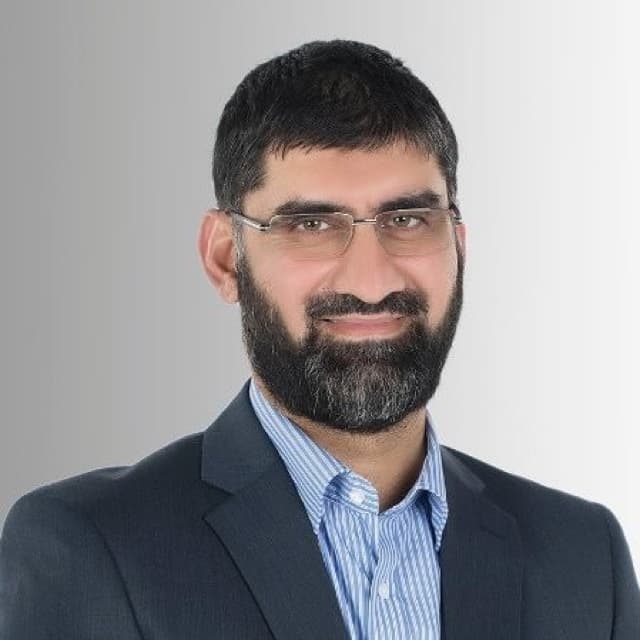
Assad Irfan
Cybersecurity transformation leader.
Leads global AI-powered cybersecurity programmes, advising brands and decision makers on strategic, cost-efficient defence. Brings the 360 degree operator view.

Pankaj Kumar
Cybersecurity transformation and strategy leader.
Eighteen years of enterprise security transformation, from on-prem through cloud, SASE and ZTNA. Carries the certification side: FIPS, Common Criteria, NIST, USGv6 and VPAT.
The people building it are the people who have had to answer for it: to a board, to an auditor, and to a certification lab.
Test run against your own
surface in under 15 minutes.
Bring one app or API. We run a bounded, instrumented engagement against your real surface, and you leave with validated evidence to compare against your last assessment.
Prove value from a pilot immediately.
The cleanest buying motion is to run Aegis against a real surface and compare the output to your last assessment.
Select target
One app, API, or agentic workflow with test credentials.
Run Aegis
Bounded budget, bounded scope, fully auditable activity.
Review evidence
Validated findings, PoC replay, impact framing, remediation path.
Compare
Time, cost, coverage, false positives and usefulness vs. your last pentest.
Pilot success criteria: reproduced findings, lower triage burden, faster evidence, and a credible path to deployment gating.
The category is arriving. The only variable is who runs it first.
The AI red team
that fights like a human.
An attacker who lands in your app does not stay there, and neither does Aegis. Autonomous agents test the application; the operating system, infrastructure and network are tested in their own modes. Every finding graded by its evidence. An attacker's view in hours, not weeks.